
Pinebrook Neighborhood Guide: What $1.5-$3M Buys You
TJ Walsh Group October 14, 2026
TJ Walsh Group October 14, 2026
Pinebrook delivers something increasingly rare in Park City real estate: genuine privacy on heavily wooded lots where you can't see your neighbors, hear traffic, or feel crowded; all within 10 minutes of world-class skiing. After showing hundreds of Pinebrook properties, I watch buyers have the same revelation: they can own 3,500 square feet on a half-acre forested lot for the same price Old Town charges for 1,800 square feet on a postage stamp, and still reach the slopes faster than people living in Jeremy Ranch or Silver Creek.
Pinebrook occupies roughly 600 acres of heavily forested hillside east of Highway 224, bounded by Pinebrook Boulevard to the west, Iron Horse Drive to the south, and extending north toward Interstate 80. This central position between Park City's three ski resort base areas creates flexibility that most neighborhoods can't match.
Park City Mountain Resort access takes 8-12 minutes from most Pinebrook homes, following Pinebrook Boulevard west to Highway 224, then south to Town Lift base parking or north to Canyons Village base. You're on snow within 20 minutes of leaving your driveway on most mornings, matching or exceeding ski access from neighborhoods like Park Meadows or Jeremy Ranch that cost 20-40% more.
Deer Valley Resort access requires 10-15 minutes, following similar routes to Highway 224 then continuing to Snow Park base area or circling to Silver Lake Village. The drive takes slightly longer than PCMR but remains far shorter than outlying neighborhoods like Jeremy Ranch (15-20 minutes) or Promontory (25-30 minutes).
Canyons Village sits closest to Pinebrook; 7-10 minutes via Pinebrook Boulevard to Highway 224 north. Many Pinebrook residents default to Canyons Village for quick morning sessions or when other resorts face parking challenges, using the flexibility of multiple close options to optimize daily conditions.
The positioning creates unusual freedom: you're not locked into a single resort's terrain, snow conditions, or crowd levels. Deer Valley grooming better today? Drive there. Canyons got 8 inches overnight? Hit that. PCMR offering free parking? Use Town Lift. Neighborhoods tied to single resorts can't replicate this flexibility.
Old Town Main Street sits 8-12 minutes from Pinebrook via Highway 224, putting restaurants, galleries, and services within easy reach without paying $600-$800 per square foot Old Town pricing. You save $800K-$1.5M by accepting a 10-minute drive versus a 5-minute walk, capturing 80% of Old Town's convenience at 50-60% of the cost.
Grocery and daily services require driving; Whole Foods sits 10-12 minutes away, with additional options at Redstone (12-15 minutes) or Kimball Junction (10-15 minutes). This distinguishes Pinebrook from neighborhoods like Prospector where you walk to Fresh Market in 8 minutes. The trade-off: you drive for groceries but save $400K-$800K on purchase price versus walkable neighborhoods.
Salt Lake City International Airport is 40-45 minutes from Pinebrook via I-80, slightly closer than central Park City (45-50 minutes) due to Pinebrook's northern position near the interstate. This matters for frequent travelers who value shaving 5-10 minutes off airport runs, though the difference rarely drives purchase decisions.
Round Valley trail system (1,200+ acres of maintained trails for hiking, mountain biking, and cross-country skiing) borders Pinebrook's eastern and northern edges. Many Pinebrook properties offer direct trail access from backyards, eliminating the need to drive to trailheads.
The trail access creates different lifestyle patterns than in-town neighborhoods:
Properties with direct trail connections command $50K-$100K premiums over comparable Pinebrook homes requiring 5-10 minute walks to reach trailheads, though even these "trail-distant" properties sit closer to Round Valley than 90% of Park City real estate.
The characteristic that defines Pinebrook; and drives many purchase decisions; is the heavily forested character that creates genuine privacy impossible to find in most Park City neighborhoods.
Typical Pinebrook lots range 0.30-0.60 acres (13,000-26,000 square feet), with many properties approaching or exceeding 0.75 acres. This alone doubles or triples the land area of in-town neighborhoods like Old Town (0.08-0.12 acres), Prospector (0.15-0.25 acres), or Thaynes Canyon (0.15-0.35 acres).
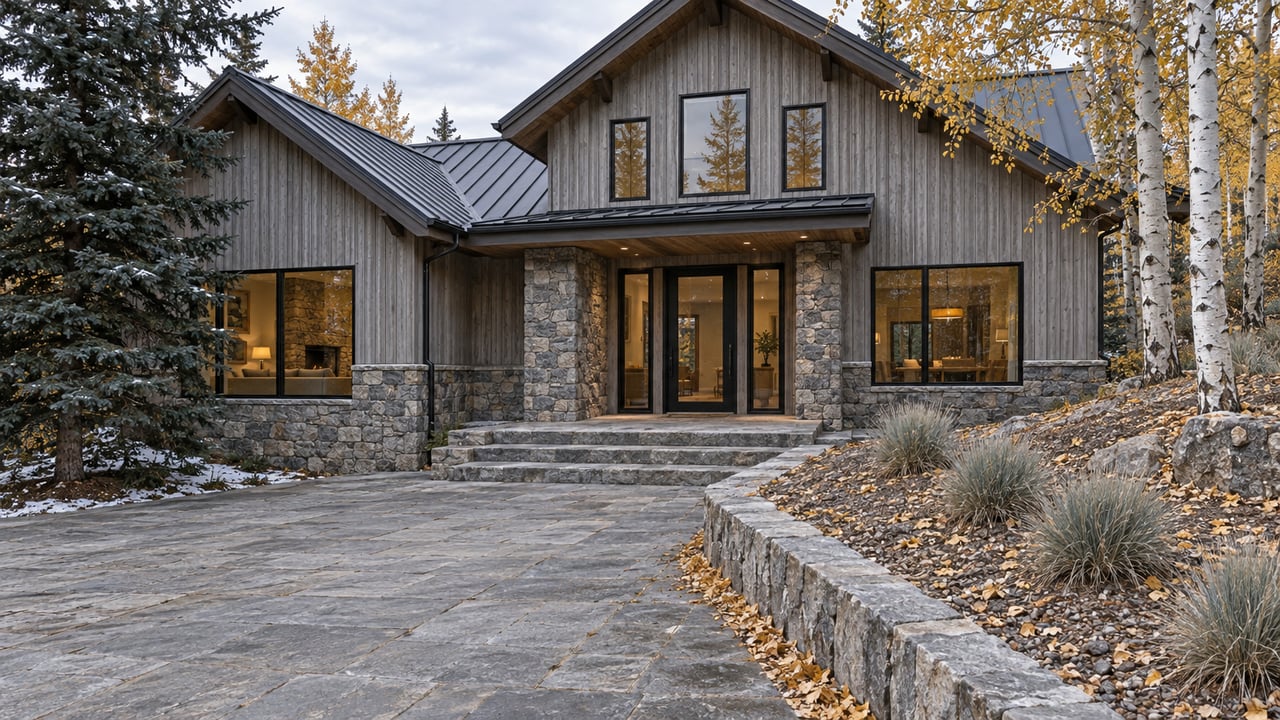
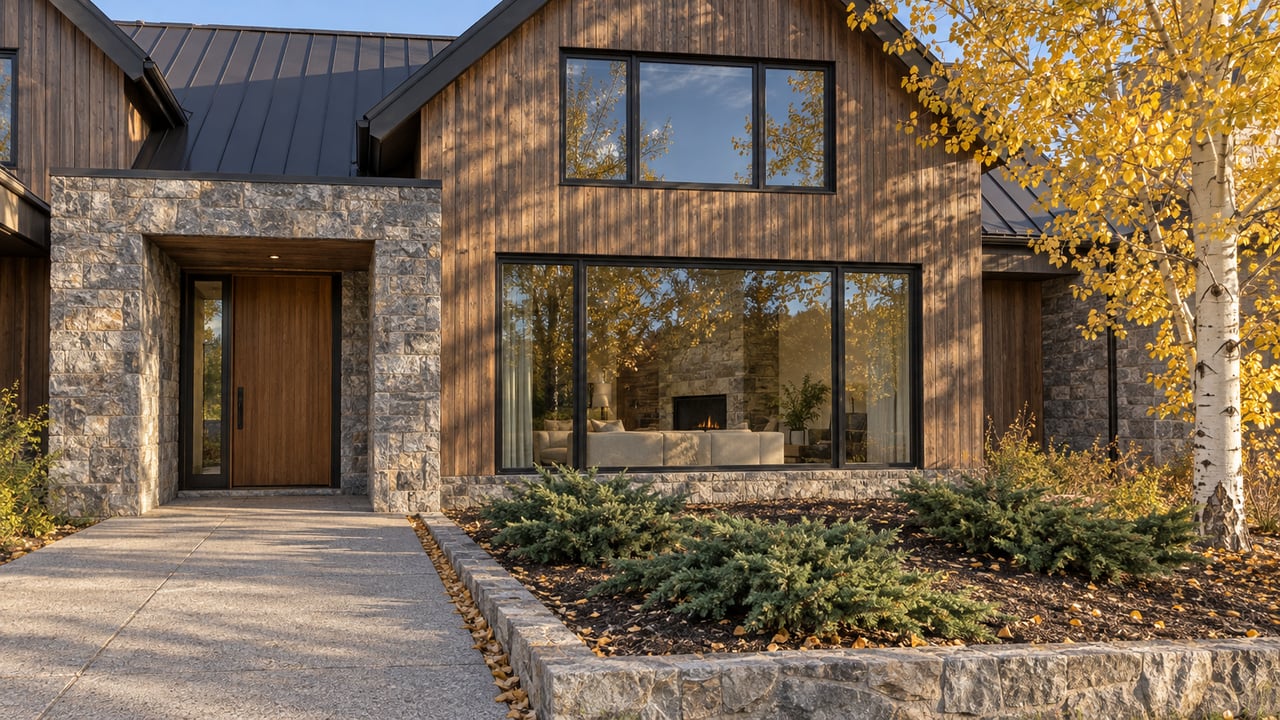
The acreage advantage combines with mature forest coverage; primarily aspen, pine, and oak; creating visual and acoustic privacy that smaller lots can't replicate even with strategic landscaping. On a typical 0.45-acre Pinebrook lot, you might see glimpses of neighboring rooflines through trees in winter when aspens lose leaves, but you won't see into neighbors' windows, hear conversations, or feel overlooked.
Forest density varies within Pinebrook. Properties on the western edge near Pinebrook Boulevard often sit on more open lots with selective tree coverage (0.30-0.40 acres, 40-60% forest coverage), while homes deeper into the neighborhood toward Round Valley boundaries occupy heavily wooded parcels (0.45-0.75 acres, 70-90% forest coverage). The $200K-$400K price difference between edge and interior Pinebrook often reflects this privacy gradient.
Visual isolation: From many Pinebrook homes, you can't see another structure from any window. You might spot rooflines through bare winter trees, but during the 8-month period when aspens have leaves (April-November), you're surrounded by forest with no visible neighbors. This creates a cabin-in-the-woods feeling 10 minutes from ski lifts.
Acoustic separation: The combination of lot size, forest buffer, and limited through-traffic means Pinebrook properties experience genuine quiet. You hear wind in trees, birds, occasional wildlife; not neighbors' conversations, car doors, or barking dogs from adjacent properties. For buyers escaping urban or suburban density, the acoustic privacy registers as much as visual separation.
Outdoor living without being watched: Pinebrook decks, patios, and hot tubs function without the self-consciousness that comes from neighbors overlooking your outdoor spaces. You're not performing for an audience when using your backyard; it's genuinely private outdoor space in a way that 0.10-acre in-town lots with 10-foot side setbacks can never replicate.
Wildlife as neighbors: The forest buffer invites wildlife that wouldn't approach more developed areas. Deer browse through yards daily, moose appear weekly in many parts of Pinebrook, elk move through during migration periods, and smaller wildlife (foxes, rabbits, squirrels, countless bird species) treat Pinebrook lots as natural habitat. Some buyers find this magical; others view it as maintenance challenge (deer eating landscaping, moose refusing to leave driveways). Understanding your comfort with wildlife before buying Pinebrook prevents post-purchase regret.
The privacy comes with trade-offs that don't suit all buyers:
No walkability: You drive everywhere; groceries, restaurants, coffee, errands. This saves $400K-$1M versus walkable Old Town or Prospector but creates car dependency that some buyers underestimate until experiencing it daily.
Longer driveways and private roads: Many Pinebrook properties sit 100-300 feet back from public streets on private driveways through forest. Beautiful in summer; potential hassle in winter requiring regular plowing ($1,500-$3,000 per season for private driveway snow removal beyond what HOA covers).
Wildlife encounters: That moose in your driveway is charming when you're running late to catch first chair, less so when it refuses to move and you're genuinely late. Deer eating your landscaping costs $2K-$5K annually in replacement plants if you don't install (expensive) fencing.
Wildfire awareness: Heavily forested lots in mountain environments carry wildfire risks that require mitigation (defensible space creation, removing dead trees and underbrush, metal roofing, non-combustible siding in some cases). This adds $5K-$15K to annual maintenance beyond typical home upkeep, and affects insurance availability and costs.
Pinebrook delivers exceptional space-per-dollar value compared to in-town Park City neighborhoods, though understanding price tiers within Pinebrook helps buyers target appropriate properties.
Properties at this price point typically include:
The typical buyer: families or couples seeking Pinebrook's privacy and value at accessible pricing, willing to update properties over time. Many of these homes present renovation opportunities; invest $100K-$150K in kitchen, bathrooms, and flooring to create $1.9M-$2.2M turnkey properties.
Value comparison: $1.7M in Pinebrook buys 3,000 square feet on 0.35 acres with forest privacy, while the same $1.7M in Old Town buys 1,400 square feet on 0.09 acres requiring Victorian maintenance, and in Prospector gets 2,200 square feet on 0.18 acres with neighbors 15 feet away. Pinebrook delivers 35-115% more square footage and 2.5-4x more land for the same money.
This range represents Pinebrook's sweet spot; updated homes in prime wooded locations:
Buyers in this range prioritize turnkey living with Pinebrook's privacy advantages fully realized. They want the wooded retreat lifestyle without managing major renovation projects, accepting $200K-$400K premiums over fixer properties to avoid construction headaches.
Value comparison: $2.2M in Pinebrook buys 3,500 square feet on 0.50 acres of private forest, while the same $2.2M in Thaynes Canyon gets 2,400 square feet on 0.22 acres with visible neighbors, in Park Meadows provides 2,800 square feet on 0.30 acres (more open, less privacy), and in Old Town delivers 1,600 square feet on 0.10 acres requiring Victorian upkeep. Pinebrook provides 45-120% more square footage and 2-5x more land at this price point.
At the top of Pinebrook pricing, you're buying either extensively renovated showcase homes or newer custom construction:
These properties compete with $3M-$4M homes in other Park City neighborhoods but deliver significantly more space and land. Buyers choosing Pinebrook at this level typically prioritize privacy and nature immersion over walkability or prestige addresses, understanding they're trading Old Town cachet for genuine mountain retreat living.
One of Pinebrook's most attractive financial features; particularly compared to resort-adjacent neighborhoods; is minimal HOA fees that barely register in annual carrying costs.
Pinebrook HOA fees range $50-$150 annually (not monthly; annually), covering:
That's it. No pools, hot tubs, fitness centers, concierge services, slope maintenance, or luxury amenities. The trade-off for privacy and value is taking care of your own property rather than relying on comprehensive HOA services.
The minimal HOA fees create dramatic savings over 10-20 year ownership periods:
Over 20 years of ownership, Pinebrook's minimal HOA fees save $200K-$1M compared to resort-adjacent condos and townhomes. That's real money that can fund renovations, vehicles, vacations, or remain invested rather than paying for amenities you may not use.
The minimal HOA fees mean you're responsible for:
Annual self-managed maintenance costs in Pinebrook typically run $8,000-$18,000 for 3,000-4,000 square foot homes on 0.40-0.60 acre lots. This exceeds the $6,000-$12,000 typical for in-town properties on smaller lots with less landscaping, but remains far below the $24,000-$54,000 HOA fees alone in Upper Deer Valley condos (before any additional maintenance).
Buyers comfortable with property management responsibilities save significantly in Pinebrook. Those wanting comprehensive HOA services handling everything should consider resort-adjacent properties despite higher costs.
Pinebrook's housing stock reflects construction periods from the neighborhood's development in the early 1980s through ongoing custom builds today. Understanding construction era characteristics helps buyers target appropriate properties.
Represent 40-50% of Pinebrook inventory, typically featuring:
Many 1980s Pinebrook homes have undergone partial renovations; updated kitchens and bathrooms while maintaining original layouts and exterior elements. Others remain largely original, presenting opportunities for buyers willing to invest $120K-$200K in comprehensive modernization.
Maintenance considerations: Budget $12K-$20K annually for homes in original or partially updated condition, with systematic planning for aging systems (roof, HVAC, water heater, windows all approaching end of useful life simultaneously).
Makes up 30-40% of the neighborhood:
These homes typically need fewer immediate updates than 1980s construction, though standard system replacements occur as properties age (roofs at 20-25 years, HVAC at 15-20 years, water heaters at 10-15 years).
Maintenance expectations: $8K-$15K annually for well-maintained homes with systems in mid-life, with periodic major expenses rather than comprehensive system replacements.
Represent 20-30% of current inventory:
These properties command top-of-market Pinebrook pricing ($2.5M-$3M+) but deliver modern luxury while maintaining the wooded privacy character that defines the neighborhood.
Maintenance profile: $6K-$12K annually for newer homes with modern systems under warranty, minimal capital expenses for 10-15 years beyond normal wear items.
Pinebrook's heavily forested character invites wildlife encounters that range from delightful to challenging depending on perspective and preparedness.
Deer browse through Pinebrook yards daily, particularly in spring, summer, and fall when vegetation is abundant. Herds of 5-15 deer commonly move through properties, eating landscaping, bedding down in shaded areas, and generally treating Pinebrook as natural habitat. They're beautiful to watch but devastating to gardens and ornamental plants unless you install fencing or choose deer-resistant landscaping.
Moose appear weekly in many parts of Pinebrook, particularly in winter when they move to lower elevations for easier foraging. A cow moose with calf in your driveway is majestic; until you need to leave for the airport and she won't budge for 45 minutes. Moose are unpredictable and potentially dangerous; giving them wide berth and waiting them out is the only safe approach.
Elk migrate through Pinebrook seasonally, usually moving quickly through the neighborhood between higher and lower elevations. Seeing a herd of 30-50 elk pass through creates memorable experiences, though they do similar landscape damage as deer if they pause to graze.
Foxes, rabbits, squirrels, and countless bird species provide daily entertainment. Foxes hunting in yards, rabbits bounding through underbrush, and diverse birdlife (including occasional raptors hunting smaller birds and rodents) create constant nature observation opportunities.
Black bears occasionally wander through Pinebrook, particularly in late summer and fall when they're actively feeding before hibernation. Encounters remain rare (most Pinebrook residents might see bears once every 2-3 years), but proper food storage, garbage management, and bird feeder removal during active bear months become important safety practices.
Deer-resistant landscaping uses plants deer find unpalatable: lavender, Russian sage, ornamental grasses, yucca, juniper. This reduces (but doesn't eliminate) browse damage while maintaining attractive yards. Cost: comparable to typical landscaping with plant selection being the primary change.
Fencing provides the only reliable deer protection but requires investment. Eight-foot fencing (deer can jump 6-foot fences) costs $25-$50 per linear foot installed. Fencing a typical 0.45-acre Pinebrook lot (roughly 500 linear feet perimeter) runs $12,500-$25,000. Many Pinebrook owners fence vegetable gardens or specific landscape areas rather than entire properties.
Moose awareness means checking driveways and yards before letting pets out or children to play. Moose with calves are particularly protective and dangerous. No fence keeps determined moose out; waiting them out remains the only safe strategy.
Bear-proofing requires securing garbage in bear-proof containers or garages, removing bird feeders June-November, and avoiding outdoor food storage. Summit County provides bear-proof garbage containers; using them properly prevents problems. Cost: minimal beyond initial container investment ($150-$300).
Understanding Pinebrook's value equation relative to other Park City neighborhoods helps buyers determine whether the trade-offs make sense for their priorities.
Pinebrook: 3,200-3,800 square feet on 0.45-0.55 acres of private forest, 4-5 bedrooms, updated finishes, 10 minutes to ski resorts, minimal HOA ($100/year)
Old Town: 1,600-2,000 square feet on 0.08-0.10 acres, 3 bedrooms, Victorian maintenance costs $20K-$30K annually, 5-minute walk to Main Street, no HOA but parking challenges
Prospector: 2,600-3,000 square feet on 0.20-0.25 acres, 4 bedrooms, neighbors visible from all windows, 10-minute walk to Old Town, no HOA for single-family
Thaynes Canyon: 2,400-2,800 square feet on 0.22-0.30 acres, 4 bedrooms, some forest but neighbors visible, 5-10 minute walk to Old Town, no HOA
Park Meadows: 2,800-3,200 square feet on 0.28-0.35 acres, 4 bedrooms, open lots with minimal trees, walkable schools, Park Meadows Country Club access, HOA $200-$400/month
Pinebrook delivers 30-140% more square footage and 2-7x more land at the $2M price point compared to other neighborhoods. The trade-off: you drive everywhere versus walking to amenities, and you manage significant wooded lots versus minimal maintenance in-town properties.
Pinebrook:
Old Town:
Prospector single-family:
Lower Deer Valley condo:
Pinebrook's carrying costs fall in the middle range; lower than Old Town Victorian upkeep and comparable to resort-adjacent condos, but higher than low-maintenance in-town properties like Prospector. The significant savings come from minimal HOA fees ($50-$150 vs $9,600-$54,000 in resort communities).
Pinebrook excels for buyers who
Pinebrook creates challenges for buyers who
The ideal Pinebrook buyer values space, privacy, and nature connection above convenience and walkability, skis enough to justify 10-minute resort drives, and finds joy rather than burden in managing larger properties with forest character.
Pinebrook properties generate moderate rental income that helps offset carrying costs without providing compelling investment returns on their own.
Winter ski season (December-March):
Summer season (June-August):
Shoulder seasons (April-May, September-November): $150-$350/night depending on size, limited demand
Aggressive rental approach (renting 8-9 months annually, personal use 1-2 months):
The math barely works as pure investment. A $400K down payment (20% on $2M) generating $0-$11K annually returns 0-2.8% before financing costs. Most buyers use rental income to offset carrying costs during non-use periods rather than expecting meaningful investment returns.
Balanced approach (renting 4-5 months peak season, personal use 2-3 months):
This approach works for buyers who want the property primarily for personal use but need to generate some income to justify the expense to themselves or family members.
Pinebrook rentals attract:
Pinebrook struggles to attract:
The rental market positioning creates steady demand at mid-tier pricing but caps upside potential. Pinebrook properties rent consistently but rarely command premium rates.
Pinebrook excels for specific buyer profiles while creating challenges for others. Honest assessment of your priorities determines whether this neighborhood deserves focused attention.
Prioritize privacy and nature immersion above walkability and convenience. You want to see forest from every window, hear wildlife instead of neighbors, and feel genuinely removed from density despite being 10 minutes from world-class skiing.
Value space and land for the money. You need 4-5 bedrooms for family, guests, or home offices, and you want usable outdoor space (0.40-0.60 acres) for pets, children, or simply enjoying private forest setting.
Accept car dependency as trade-off for privacy and value. You're comfortable driving to groceries, coffee, restaurants, and all daily activities, understanding this saves $400K-$1M versus walkable neighborhoods.
Enjoy property management or don't mind hiring it done. You're comfortable arranging your own snow plowing, landscaping, tree maintenance, and wildfire mitigation rather than relying on comprehensive HOA services.
Appreciate wildlife encounters as enhancement rather than nuisance. You find deer in your yard delightful, moose sightings exciting, and diverse birdlife engaging, while accepting occasional browse damage and driveway blockages.
Ski frequently enough (15-25+ days per season) that 10-minute resort drives remain convenient rather than burdensome. The time investment compounds over a season; 30 ski days at 20 minutes round-trip adds 10 hours annually versus resort-adjacent properties.
Want walkable daily amenities and find the idea of driving for coffee or groceries frustrating. Pinebrook requires driving everywhere; if this creates lifestyle friction rather than acceptable trade-off, consider Prospector or Old Town.
Prefer low-maintenance ownership without managing large wooded lots. The 0.40-0.60 acre forested lots require ongoing attention; landscaping, tree trimming, wildfire mitigation, wildlife damage repair. If this sounds burdensome rather than engaging, consider condos or townhomes with comprehensive HOA services.
Visit infrequently (monthly or quarterly trips totaling 15-25 days annually). The privacy, space, and nature benefits matter less when you're rarely present, making the walkability sacrifices harder to justify.
Dislike wildlife or find animals eating landscaping, blocking driveways, or requiring careful outdoor navigation (moose with calves) more frustrating than charming.
Prioritize Old Town social scene and Main Street energy. Pinebrook offers quiet forest retreat living; if you want to be in the action rather than removed from it, pay the premium for Old Town proximity.
Need strong rental income to justify purchase. Pinebrook generates moderate rental returns (0-3% of property value annually) that help offset costs but rarely provide compelling investment returns alone.
The ideal Pinebrook buyer values privacy, space, and nature connection above convenience, accepts car dependency and property management responsibilities in exchange for significant cost savings, and finds genuine joy in wooded mountain living rather than viewing forest lots as maintenance burden.
For more value-focused neighborhoods, see Park City's Best Value Neighborhoods Where $1.5M Still Gets You Mountain Access. For a direct comparison, see our guide to Jeremy Ranch vs Pinebrook comparing these two popular value neighborhoods.
Stay up to date on the latest real estate trends.
TownLift reported that Fourth Space Studios is a heated-mat fitness studio founded by Park City

Monthly HOA fees in Park City range from $200 to $4,000+ depending on location and services provided.
Want walkable daily amenities and find the idea of driving for coffee or groceries frustrating.
Cash buyers still dominate, but financing becomes more common in this range compared to higher tiers.
The neighborhoods that work best for families aren't always the ones featured in resort marketing materials.
The Deer Valley ski-in/ski-out condo costs $2.8M for 1,800 square feet and $1,500 monthly HOA fees.
Choosing between Park City's ski resorts ultimately depends on how you plan to use the property.
The hidden costs, special assessments, fee escalation, inadequate reserves, and expensive services.
Whether you’re buying, selling, or exploring your options in Park City, TJ Walsh is here to help you move forward with local insight and personalized guidance. Reach out to start a conversation about your real estate goals.
TJ WALSH GROUP
1153 CENTER DR G-200 PARK CITY, UT 84098