The Real Cost of Owning a Home in Park City Beyond Your Mortgage Payment
TJ Walsh Group October 14, 2026
TJ Walsh Group October 14, 2026
The mortgage payment is just the starting line. Property taxes, HOA fees, insurance, utilities at altitude, snow removal, and a dozen other expenses add up quickly, often doubling or tripling what buyers initially budget for monthly costs.
Understanding the full cost picture before you buy prevents surprises after closing. Here's what Park City ownership actually costs when you account for everything beyond your mortgage payment.
Property taxes in Summit County consistently surprise buyers relocating from other states. While Utah ranks as having relatively low property taxes overall, Park City's high property values create substantial annual bills.
Primary residences face an effective tax rate of approximately 0.55% of assessed value. A $2M primary residence generates around $11,000 annually in property taxes. A $5M home runs approximately $27,500 per year.
Second homes and vacation properties get taxed at roughly 1% of assessed value, nearly double the primary residence rate. That same $2M property costs $20,000 annually as a second home. The $5M property jumps to $50,000 per year when not your primary residence.
The primary residence exemption requires filing paperwork with the Summit County Assessor before May 1st of the tax year. You'll need proof of full-time occupancy (driver's license showing Park City address, utility bills, etc.). If you're splitting time between Park City and another residence, you can only claim one property as primary, choose strategically based on which state/county offers better tax treatment.
Assessed values don't always match purchase prices. Properties are reassessed annually based on comparable sales, and Summit County has seen average increases exceeding 50% during hot market years. If your assessment seems high compared to recent sales, you can appeal, though the process requires evidence and often benefits from professional help.
Property tax bills arrive in November with payment due by the end of the month. Many mortgage holders pay through escrow, spreading costs across twelve monthly payments. Cash buyers need to budget for the annual lump sum or set up quarterly estimated payments.
These numbers assume standard residential classification. Properties with guest houses, rental units, or commercial components may face different rates. Agricultural land exemptions exist but require proof of legitimate farming/ranching operations, not just horses in a pasture.
Monthly HOA fees in Park City range from $200 to $4,000+ depending on location and services provided. This isn't a rounding error, it's a significant ongoing expense that varies dramatically by property type.
Family neighborhoods (Park Meadows, Jeremy Ranch, Pinebrook) typically charge $200-$600 monthly for single-family homes. These fees cover basic snow removal from community roads, landscaping of common areas, and neighborhood amenities like parks or clubhouses. Some HOAs include trash removal and exterior building maintenance.
Canyons Village condos run $400-$1,000 monthly, covering snow removal, exterior maintenance, building insurance, common area upkeep, and sometimes utilities like water/sewer. The fees feel high until you calculate what you'd spend managing these tasks independently.
Lower Deer Valley condos range from $1,000-$1,800 monthly, adding concierge services, heated walkways, building staff, and more extensive amenities. You're paying for the resort-style services and immediate ski access convenience.
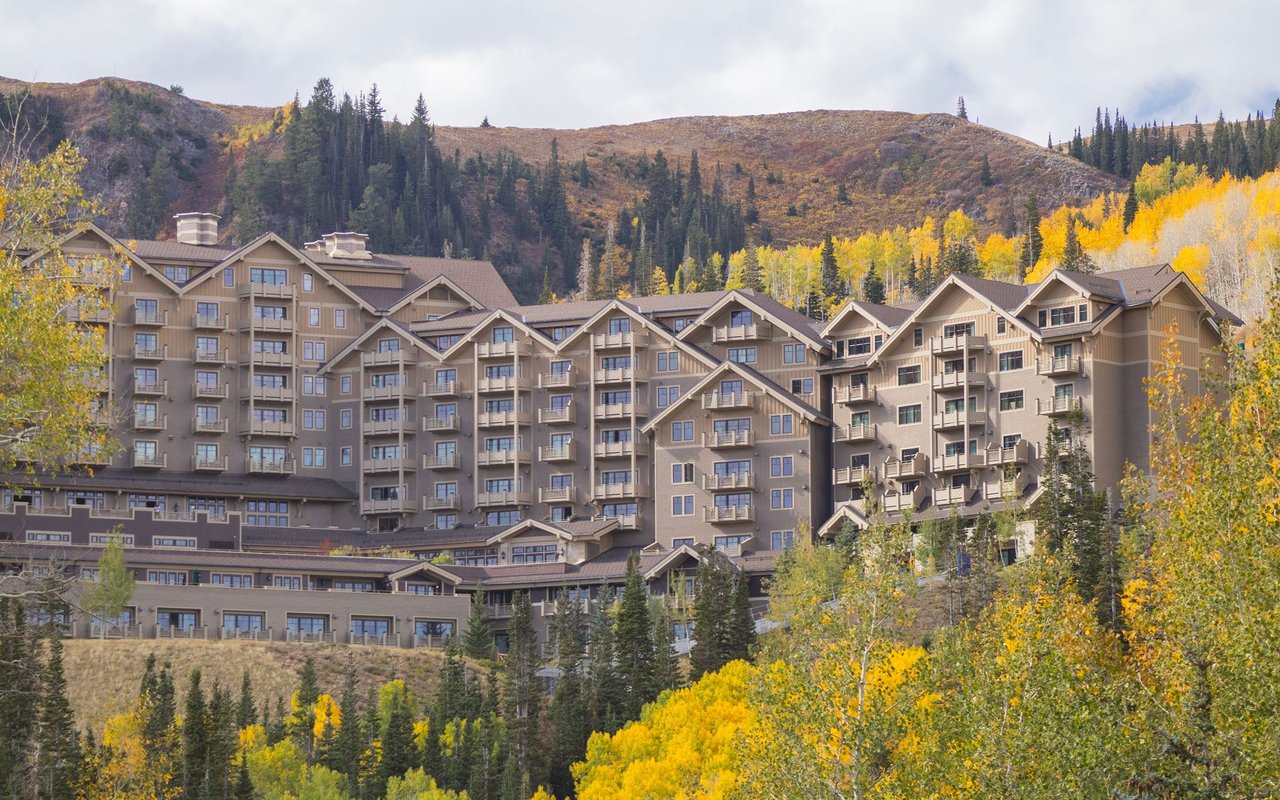
Upper Deer Valley and Empire Pass luxury condos hit $1,500-$4,000 monthly at developments like Montage, Argent, or Silver Strike Lodge. These fees fund full resort services, 24/7 front desk, spa facilities, pools, restaurants, valet services, snow removal, building management, and extensive common area maintenance. The properties function as hotels when you're not present.
HOA fees typically increase 3-5% annually to cover rising costs for labor, insurance, and services. Budget for steady growth rather than assuming current fees will hold long-term. Special assessments can add thousands when major building repairs or improvements become necessary, roof replacements, elevator upgrades, or facade work hit all owners with one-time charges.
Read HOA budgets and meeting minutes before buying. Underfunded reserves signal future special assessments. HOAs with healthy reserves and conservative planning deliver fewer surprises. Ask what percentage of units are owner-occupied versus rental, high rental percentages can correlate with deferred maintenance and lower building standards.
Homeowners insurance in Park City costs more than comparable properties at lower elevations due to wildfire risk, weather exposure, and reconstruction costs at altitude.
Standard homeowners insurance for a $2M property typically runs $5,000-$8,000 annually ($417-$667 monthly). A $5M property jumps to $12,000-$20,000 annually ($1,000-$1,667 monthly). These ranges assume standard coverage with $1,000-$2,500 deductibles and no unusual risk factors.
Wildfire risk affects properties in wooded areas or near open space. Some areas require defensible space (cleared vegetation zones) around structures before insurers will provide coverage. Properties bordering national forest or in high-risk fire zones may face higher premiums or require specialized carriers. After major wildfire seasons, some national carriers reduce mountain property coverage, pushing buyers toward Utah-specific or mountain-region insurers.
Weather exposure includes wind, hail, and heavy snow loads. Roofs rated for Park City's snow loads cost more to replace than standard roofs. Some policies require percentage deductibles (2-5% of home value) for wind or hail damage rather than flat dollar amounts, a $5M home with 2% wind deductible means you pay the first $100,000 of wind damage.
Reconstruction costs at altitude run higher than urban areas. Building materials cost more to transport, labor rates are elevated due to mountain town economics, and construction windows are shorter (you can't frame houses in January at 8,000 feet). Insurers factor these costs into replacement value calculations, driving up premiums.
Vacant property riders become necessary for second homes. Standard policies require occupancy at least part of the year. Properties sitting empty for months need vacant property coverage, which costs 30-50% more than occupied home policies. Some insurers won't cover properties vacant more than 60 consecutive days without specific riders.
Liability coverage matters more in Park City than people expect. Someone injured on your property while hiking nearby trails, slipping on ice in your driveway, or hurt in any accident on your land can sue. Umbrella policies providing $1M-$5M in additional liability coverage cost $300-$1,000 annually, cheap insurance given the litigious environment and the fact that mountain properties attract visitors.
Shop multiple carriers rather than accepting the first quote. Park City has local agents familiar with mountain property challenges who work with carriers specializing in high-value mountain homes. National carriers sometimes refuse coverage or quote unreasonably high premiums because they lack experience with mountain properties.
Heating a home at 7,000+ feet elevation costs significantly more than the same home at sea level. Natural gas, propane, and electric rates in Park City run higher than state averages, and you'll use more energy maintaining comfortable temperatures through six-month winters.
Natural gas serves most in-town properties. Winter heating bills for a 3,000 sq ft home typically run $300-$500 monthly during December-March, dropping to $100-$200 in shoulder months, and $50-$100 in summer. A 5,000 sq ft home can hit $600-$800 monthly during peak winter.
Propane serves properties outside natural gas service areas. Propane costs more per BTU than natural gas and requires managing delivery schedules and tank rentals. Budget $2,000-$5,000 annually for propane heating depending on home size, insulation quality, and personal temperature preferences. Propane prices fluctuate seasonally, buy in summer when prices drop rather than waiting until your tank hits empty in January.
Electricity costs average $150-$300 monthly for typical homes, spiking higher if using electric heat or running hot tubs year-round. Modern smart homes with extensive lighting, automated systems, and home theaters push costs higher. Solar panels help but require south-facing roof exposure and initial investment of $30,000-$60,000+ for systems large enough to offset significant usage.
Water and sewer run $100-$200 monthly for most properties, higher if you're watering large landscaped areas in summer. Some developments use well water with lower costs but potential quality/quantity issues. Most in-town properties connect to municipal water with reliable supply and consistent billing.
Internet and phone typically cost $100-$150 monthly for fiber internet (available in most Park City neighborhoods) and phone service. Fiber delivers the speeds needed for remote work and streaming. Rural properties may rely on satellite internet, which costs more and delivers lower speeds.
Snow removal (if not included in HOA) costs $1,000-$3,000+ per winter for residential driveways. One-time plowing runs $75-$150 depending on driveway size. Seasonal contracts with guaranteed response times cost more but ensure access during major storms. Properties with steep driveways need snow removal within hours of storms, letting snow compact and freeze makes access dangerous or impossible.
Homes built in the 1970s-1990s typically have poor insulation by modern standards. Upgrading insulation, replacing old windows, and improving weatherstripping can cut utility costs 20-30%. New construction with modern building codes runs more efficiently but still faces higher costs than lower-elevation properties due to longer heating seasons.
Mountain properties require more maintenance than homes at lower elevations. Weather extremes, UV exposure, snow loads, and freeze-thaw cycles accelerate wear on every building component.
Roofs last 15-20 years in Park City versus 25-30 years at lower elevations. Heavy snow loads, ice dams, and UV degradation shorten lifespan. Replacing a roof on a 3,000 sq ft home costs $15,000-$30,000. Larger homes or premium materials (metal, slate) can hit $50,000-$100,000+.
Exterior paint requires attention every 5-7 years rather than 10-15 years at lower elevations. UV exposure at altitude fades and degrades paint faster. Expect $8,000-$20,000 to repaint a typical home's exterior depending on size and siding type.
Decks and exterior wood take a beating from snow, sun, and freeze-thaw cycles. Annual staining/sealing costs $1,000-$3,000 for typical decks. Full deck replacement runs $10,000-$40,000 depending on size and materials. Composite decking costs more initially but requires less maintenance.
HVAC systems work harder at altitude and in extreme temperature swings. Furnaces and AC units typically need replacement every 12-15 years rather than 15-20 years. New HVAC systems cost $8,000-$15,000 for standard homes, more for large properties requiring multiple zones.
Windows and doors face seal failures from freeze-thaw cycles. Replacing windows costs $500-$1,500 per window installed. Full home window replacement on a 3,000 sq ft home runs $25,000-$60,000.
Plumbing and weatherization require seasonal attention. Pipes in exterior walls, crawl spaces, or unheated areas need proper insulation to prevent freezing. Burst pipes cause extensive damage, prevention is cheaper than cleanup.
Landscaping at altitude requires mountain-adapted plants and ongoing care. Irrigation systems need fall blow-outs to prevent freeze damage ($100-$200 annually). Spring and fall cleanup, mowing, and plant care run $200-$500 monthly during growing season.
Budget 1-2% of home value annually for maintenance and repairs. A $2M home needs $20,000-$40,000 per year; a $5M home requires $50,000-$100,000 annually. Some years cost less (routine maintenance only), others spike higher (roof replacement, HVAC system, or major repairs). Over time, the average holds.
Second home owners who aren't present year-round typically need property management services. Costs vary based on services required, but budget $300-$1,000+ monthly depending on property size and service level.
Basic monitoring (drive-by checks, mail collection, general property welfare) costs $200-$400 monthly. Managers visit weekly or bi-weekly, ensure the property appears secure, and alert you to any visible issues. This doesn't include actual maintenance, just eyes on the property.
Standard management (monitoring plus coordinating repairs, meeting service providers, managing emergencies) runs $400-$700 monthly. Managers handle scheduling for routine maintenance, coordinate with HOA, and respond to problems like burst pipes or roof leaks. They don't do the work themselves but manage contractors and oversee solutions.
Full-service management (standard services plus rental coordination, guest services, turnover cleaning) costs $700-$1,500+ monthly for properties used personally and occasionally rented. Managers handle everything from staging the home with fresh flowers before your arrival to coordinating nightly rental bookings when you're not using the property.
Property management typically charges flat monthly fees plus percentage of rental income (20-30%) if the property generates rental income. Managers also mark up contractor work (10-20%) or charge hourly rates ($50-$100/hour) for time spent coordinating projects beyond routine monitoring.
The alternative, self-managing from a distance, often costs more in wasted time, contractor issues, emergency flight costs, and property damage from undetected problems. Reliable property managers pay for themselves through prevention and coordination.
Let's compare actual annual costs for two properties, one at $2M and one at $5M, showing both primary residence and second home scenarios.
These numbers assume standard financing. Cash buyers eliminate mortgage costs but face opportunity cost on capital. Rental income can offset some second home costs, but Summit County regulations, vacancy periods, and management expenses mean rental income rarely covers full ownership costs.
After working with hundreds of buyers, the TJ Walsh Group sees consistent patterns in what people underestimate about Park City ownership costs.
Stay up to date on the latest real estate trends.
TownLift reported that Fourth Space Studios is a heated-mat fitness studio founded by Park City
Monthly HOA fees in Park City range from $200 to $4,000+ depending on location and services provided.

Want walkable daily amenities and find the idea of driving for coffee or groceries frustrating.
Cash buyers still dominate, but financing becomes more common in this range compared to higher tiers.
The neighborhoods that work best for families aren't always the ones featured in resort marketing materials.
The Deer Valley ski-in/ski-out condo costs $2.8M for 1,800 square feet and $1,500 monthly HOA fees.
Choosing between Park City's ski resorts ultimately depends on how you plan to use the property.
The hidden costs, special assessments, fee escalation, inadequate reserves, and expensive services.
Whether you’re buying, selling, or exploring your options in Park City, TJ Walsh is here to help you move forward with local insight and personalized guidance. Reach out to start a conversation about your real estate goals.
TJ WALSH GROUP
1153 CENTER DR G-200 PARK CITY, UT 84098